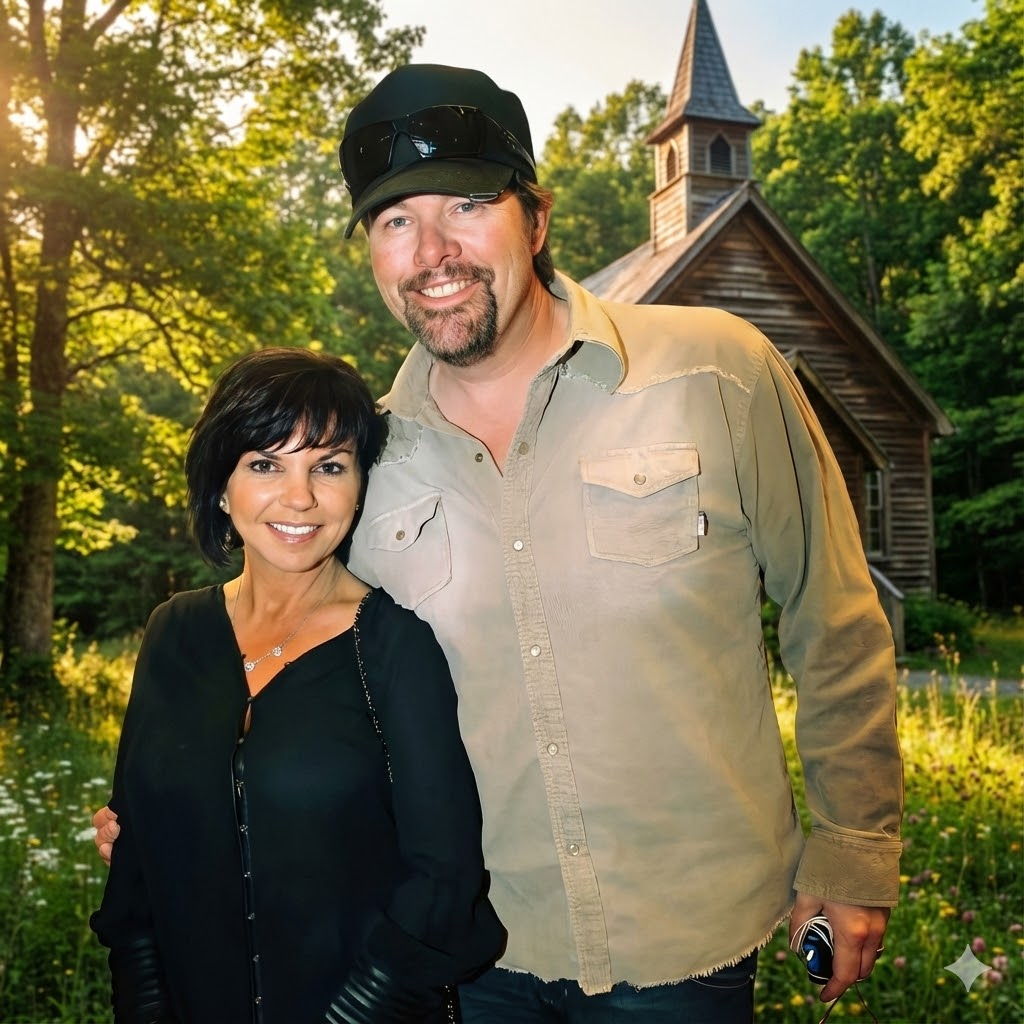
In the landscape of modern country music, few voices boomed louder—or rang truer—than that of Toby Keith. Born in the dusty heat of Clinton, Oklahoma, in 1961, Keith was never a manufactured star. He was a man cut from the cloth of the American working class, a storyteller whose career wasn’t just built on talent, but on the undeniable grit of a life lived hard.
Before he was a platinum-selling artist, Keith knew the exhaustion of the oil fields and the physical bruising of semi-pro football. He spent his nights in smoky roadhouses with the Easy Money Band, channeling the outlaw spirit of Merle Haggard and the smooth storytelling of George Strait. Nashville didn’t open its doors easily to him. In the early 90s, the industry initially turned away from his traditional sound, but Keith possessed a persistence that could not be denied. It took a demo tape passed from a flight attendant to an executive to finally light the fuse on a career that would span three decades.
When he finally broke through with the anthem “Should’ve Been a Cowboy,” he became the voice of the 1990s. But it was his 1994 hit, “Upstairs Downtown,” from the Boomtown album, that truly showcased the texture of his songwriting. While it may not be as famous as his later patriotic anthems, “Upstairs Downtown” was crucial. It revealed Keith’s unique flair for mixing humor with real-life imagery. The song painted a playful, contradictory picture of life and love, proving that Keith could do more than just sing about cowboys—he could capture the messy, funny, complicated reality of everyday people.
It was this blend of heartache and humor—the ability to write “Courtesy of the Red, White and Blue” alongside “I Love This Bar”—that made him a cultural icon. He won the awards, the ACMs and CMAs, but he never lost the common touch.
Today, Toby Keith’s legacy is defined by that authenticity. “Upstairs Downtown” remains a beloved chapter in his story, a reminder of the early days when a boy from Oklahoma proved that if you write about real life with honesty and a little bit of wit, the world will listen. He was, and always will be, the unshakeable voice of the heartland.
Video