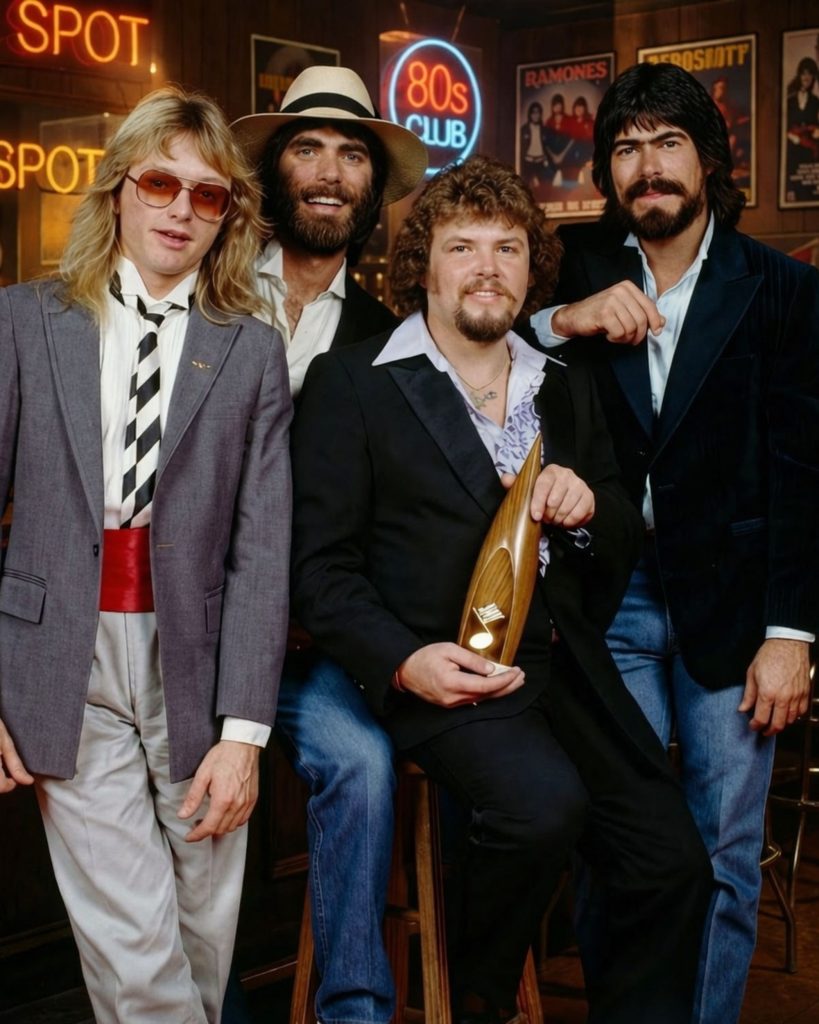
“THIS IS THE FIRST TIME I’VE BEEN OUT SINCE I WAS 18” — RANDY OWEN HEARD THESE WORDS AND REALIZED HER FREEDOM FELT MORE LIKE A CAGE…
It happened in a dimly lit hotel nightclub in Bowling Green, Kentucky. Randy Owen, the frontman for the band Alabama, wasn’t looking for a chart-topper that night, but he found a story that refused to let him go.
A group of women were gathered around a central table, ostensibly celebrating a friend’s recent divorce. But as Randy watched from the stage, he realized the guest of honor wasn’t celebrating at all—she was quietly falling apart in the middle of the noise.
She sat in a silence that didn’t belong to the room. While her friends toasted to her new life, she looked like she was drowning in the vastness of an empty house.
THE VIEW FROM THE STAGE
In the early 1980s, Alabama was the biggest force in country music. They were redefining the genre with a blend of Southern rock energy and tight, familial harmonies that made every stadium feel like a front porch.
Randy Owen was the soul of that movement. He had a rare gift for finding the extraordinary inside the ordinary, turning the simple lives of working people into anthems that stayed at the top of the charts for weeks.
But before the stadiums and the CMA awards, there were the long, grinding nights in hotel lounges. These were the places where the music met the people who actually lived the lyrics.
A NIGHT IN KENTUCKY
The air in the club was thick with cigarette smoke and the hollow clinking of glasses. The woman at the center of the table looked out of place, her eyes holding a weight that the upbeat music couldn’t lift.
When Randy spoke to her during a break, she offered a single sentence that cut through the barroom static. It was a confession that carried the weight of a lifetime.
“This is the first time I’ve been out since I was 18.”
The words landed like a physical blow.
She wasn’t a girl anymore; she was a woman who had spent her entire adult life defined by a marriage that was now gone. The “freedom” her friends were cheering for was just a cold, terrifying emptiness she didn’t know how to navigate.
Randy didn’t wait for the morning to bring a clearer perspective. He went straight back to his hotel room, the woman’s face still etched into his mind like a recurring dream.
He sat down with his guitar and the heavy silence of the Kentucky night. He didn’t want to write a song about moving on or finding someone new; he wanted to capture the exact second the floor falls out from under a heart.
THE TRUTH BEHIND THE MELODY
“Lady Down on Love” was born in those early hours. It was a song for the people who are technically free but feel more imprisoned by their memories than they ever were by their vows.
It was a slow, aching observation of the “nowhere to go” feeling that follows a long-distance heartbreak. Randy realized that for this woman, the club wasn’t a new beginning—it was just a place to realize what had been lost.
He saw the split between the world’s version of liberty and a soul’s version of grief.
When the song was released in 1983, it climbed straight to number one. Millions heard their own stories in Randy’s voice, recognizing the specific sting of a love that ends without a clean break.
Randy Owen never forgot the woman in Bowling Green. He didn’t just give the world a hit; he gave a voice to the quiet dignity of starting over when you’re not sure if you have anything left to start with.
He proved that the best songs aren’t the ones we invent, but the ones we are brave enough to overhear in the dark.
the most painful freedom is the one that arrives too late…
Video