13 YEARS. ONE PAIR OF BARBER CLIPPERS. AND THE MORNING A FORTY-TWO-YEAR-OLD FATHER PACKED HIS CAR TO RESHAPE NASHVILLE FOREVER…
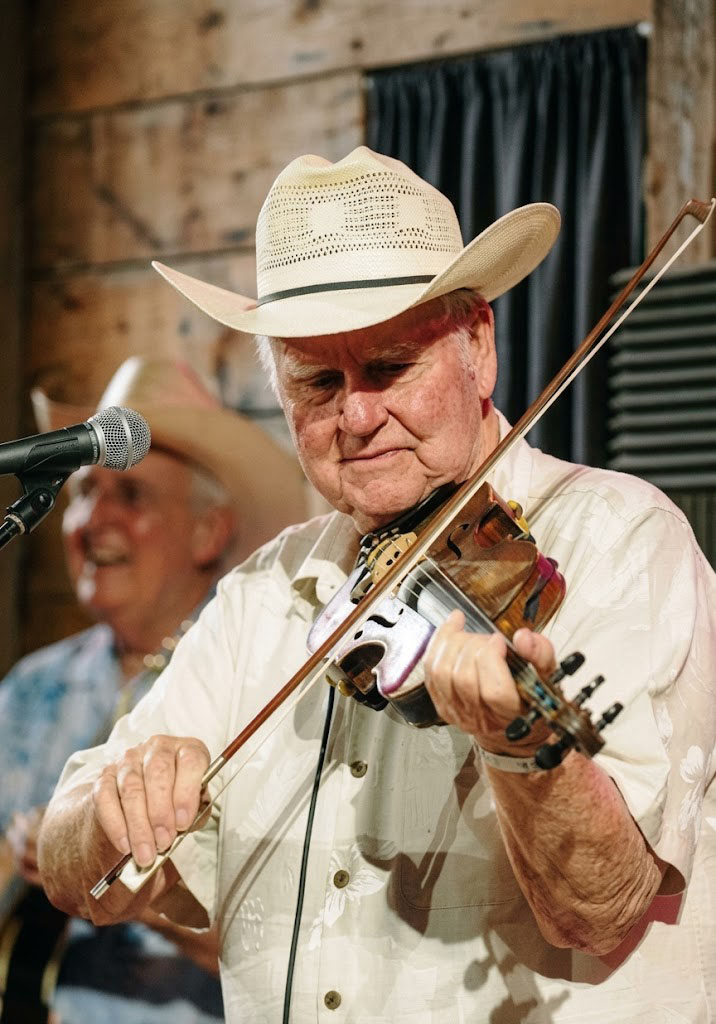
Johnny Gimble did not arrive in Music City as a young, hungry prodigy looking to steal the spotlight. He arrived in 1968 as a middle-aged man with his entire five-thousand-dollar life savings, a wife, children, and one final chance at his dream.
Within just a few years, his bow would define the modern country sound for legends like Merle Haggard, George Strait, and Conway Twitty. He became the undisputed architect of an entire musical era.
But for over a decade, country music almost lost him completely.
By 1955, the wild, joyful golden age of Western swing was slowly fading into silence. The packed Texas dance halls where Gimble had once stood alongside Bob Wills were boarding up their doors one by one.
Pure talent could not always pay the grocery bill.
So, Gimble made the quietest, heaviest choice a working musician could make.
He simply went to barber school.
THE WAITING YEARS
For thirteen long years, Gimble cut hair at the Veterans Administration hospital in Waco.
His mornings belonged to the sharp snip of scissors and the soft, steady hum of the barber shop. He stood behind the chair, cape draped over his customers, listening to old soldiers talk about the weather, old aches, and deeply ordinary memories.
Music was pushed entirely to the distant edges of his week.
He played local dances on Friday nights, keeping his fingers tough and his spirit alive. He hosted a modest local television show called The Homefolks, where he once handed a desperately needed job to a broke, unknown bass player named Willie Nelson.
He kept his family fed, and he kept his dignity intact.
Most men would have let the dream quietly fade away in that linoleum-floored room.
But those thirteen years were never a true surrender.
They were a quiet education in the human condition. Gimble learned the natural, unhurried rhythm of honest conversation. He learned patience, perfect timing, and how people spoke when they were no longer trying to impress anyone.
When Ernest Tubb finally convinced him to risk everything and drive to Nashville, Gimble brought all those ordinary stories into the studio with him.
He did not play like a session machine trying to cut a technically flawless track.
His fiddle simply breathed.
It laughed, leaned back, teased the melody, and answered the singers with a warmth no young hotshot could fake. It carried the dusty breeze of a Texas night, the echoes of dance halls, and the grounded reality of a working father.
Nashville did not just need another sharp, technically perfect fiddle player.
They desperately needed the soul that Gimble had quietly protected for over a decade.
Willie Nelson would never forget the man who hired him, later calling Gimble the absolute equal to Stéphane Grappelli and the greatest jazz violinists of the twentieth century.
He was right.
Gimble was never just a sideman standing in the background. He was a master who understood that every great song requires a foundation of lived truth.
He proved that talent does not expire just because life forces you to set it down for a little while.
The world remembers the records he played on, but the true weight of his music was forged in the quiet patience of a barber’s chair…