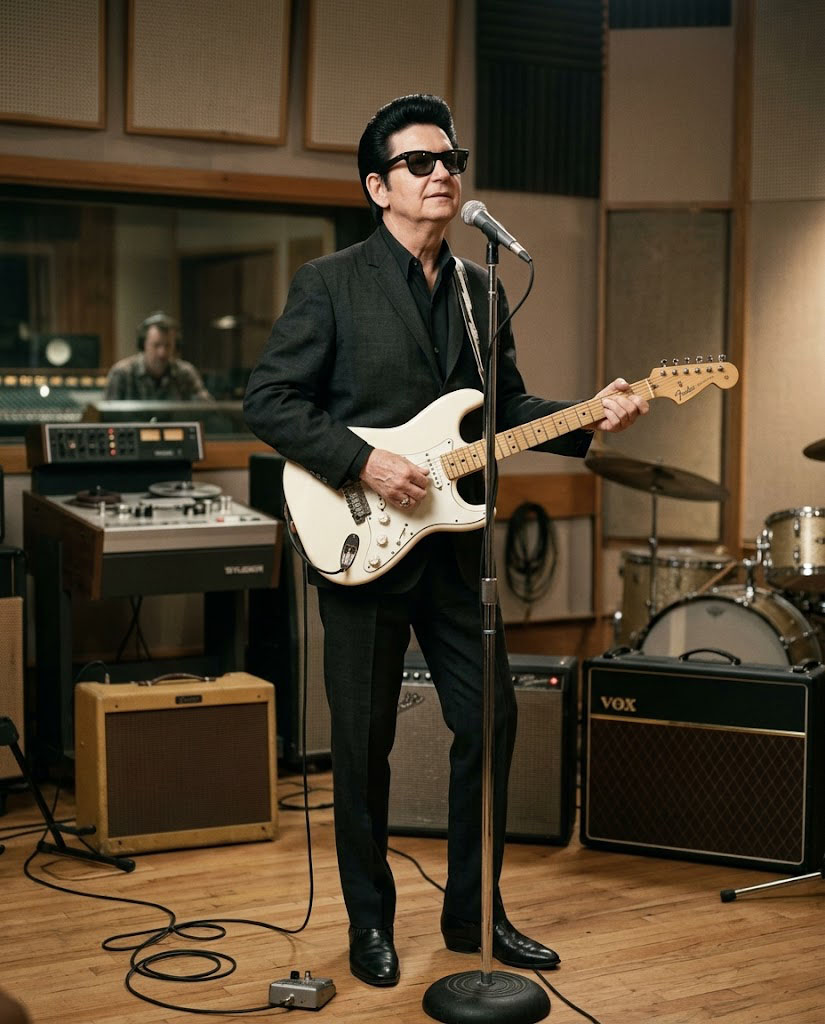
“‘BLUE ANGEL’ DIDN’T SOUND LIKE ROCK AND ROLL REBELLION — IT SOUNDED LIKE ROY ORBISON SLOWLY BREAKING HIS OWN HEART UNDER THE STREETLIGHTS OF MIDNIGHT…”
In 1960, rock and roll was becoming louder by the month.
Swagger was everywhere. Singers leaned harder into confidence, movement, and youthful chaos. The energy of the era demanded performers who looked unstoppable beneath bright lights and screaming crowds.
Then Roy Orbison released “Blue Angel.”
And suddenly, heartbreak sounded quieter. More intimate. Almost painfully human.
The song climbed into the Billboard Top 10, but chart success never fully explained why listeners carried it with them long after it ended. Other hits made people dance. Others created excitement for a season before fading into memory.
“Blue Angel” stayed.
Because Orbison did not sing it like entertainment.
He sang it like confession.
“Blue Angel, don’t you break my heart…”
In another singer’s hands, the line might have sounded dramatic or theatrical. Orbison approached it carefully, almost delicately, as though even speaking the fear aloud could make abandonment become real.
That restraint gave the song its power.
Roy Orbison always understood something many artists never did: emotion becomes more devastating when it is not forced. He never pushed heartbreak aggressively toward listeners. He simply allowed it to exist honestly inside the music until audiences recognized parts of themselves there.
That honesty made “Blue Angel” unforgettable.
The orchestration itself felt suspended in loneliness. Soft percussion moved beneath distant echoes while Orbison’s trembling tenor climbed steadily higher, carrying the sensation of emotion becoming too large for the body holding it. Every note sounded as though it might crack under the weight of what remained unsaid.
And yet he never lost control.
That balance between fragility and precision became Orbison’s signature throughout the early 1960s. While many rock singers built their identities around rebellion, Orbison built his around vulnerability. He stood nearly motionless during performances, hidden behind dark sunglasses, allowing the voice alone to carry all the drama.
And somehow, that stillness made everything feel larger.
By the time “Blue Angel” arrived, Orbison was already beginning to separate himself from traditional rock and roll completely. Songs like “Only the Lonely” had introduced audiences to a style built less around youthful excitement and more around emotional survival.
He did not sing as though heartbreak were temporary.
He sang as though heartbreak changed people permanently.
That feeling lingers throughout “Blue Angel.” There is no anger inside the song. No bitterness. No triumphant promise that he will eventually move on stronger than before. Instead, the narrator remains suspended inside the ache itself, quietly pleading for something already beginning to slip away.
That emotional surrender was rare for its time.
Especially in rock music.
Listening now, the song feels almost cinematic in its loneliness. You can picture someone sitting beside a glowing radio after midnight, replaying the same goodbye repeatedly because acceptance still feels impossible. The world outside grows quieter while memory refuses to loosen its grip.
Orbison understood that space deeply.
The space between losing someone and learning how to continue afterward.
More than sixty years later, “Blue Angel” still feels untouched by trends or changing eras because the emotion inside it never depended on fashion. Loneliness does not become outdated. Neither does longing. Orbison simply gave both emotions a voice elegant enough to survive across generations.
And maybe that is why the song still lingers long after the final note fades.
Not loudly.
Not dramatically.
Just patiently.
Because Roy Orbison never treated heartbreak like spectacle — he treated it like something sacred people carried quietly through the darkest hours of their lives…