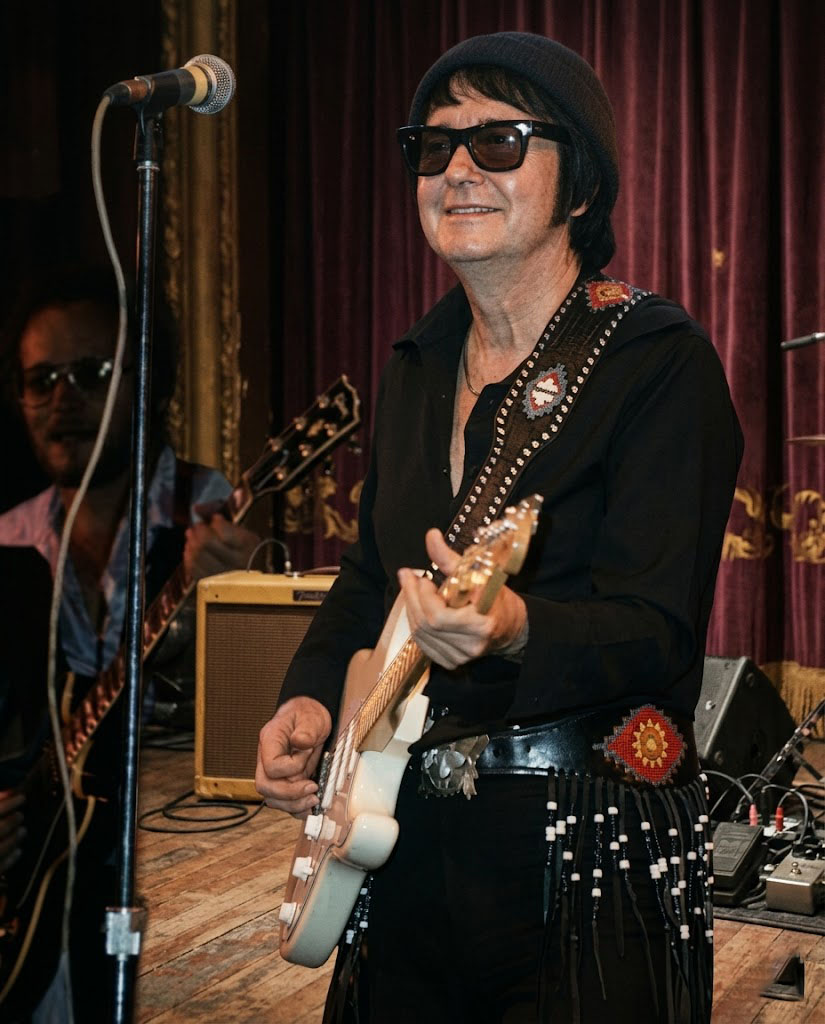
When Roy Orbison performed “Leah” during the legendary Black & White Night concert, it did not feel like a triumphant return built for applause.
It felt quieter than that.
More personal.
By then, Orbison had already endured tragedies that would have broken many people completely. The death of his wife Claudette in 1966. The loss of two sons in a house fire only two years later. Years of carrying grief privately while continuing to sing songs filled with longing and loneliness.
And somehow, all of that history seemed present when he sang “Leah.”
The song itself was never among his biggest commercial hits. It lacked the immediate recognition of “Oh, Pretty Woman” or “Crying.” But inside that room, beneath the soft stage lights surrounded by fellow musicians and old friends, “Leah” transformed into something far more intimate than a familiar classic.
It became confession.
The arrangement moved slowly, almost cautiously, as though the music itself feared disturbing old wounds. Orbison stood nearly motionless in black clothing and dark glasses, refusing every instinct toward spectacle. No dramatic gestures. No attempt to command attention through movement.
Just the voice.
And the silence around it.
That was always Roy Orbison’s rarest gift as an artist. While many singers tried to overpower audiences emotionally, Orbison trusted restraint. He understood that heartbreak becomes more devastating when delivered softly enough for listeners to lean toward it themselves.
“Leah” carried that restraint perfectly.
Every line sounded suspended somewhere between memory and exhaustion. Orbison did not sing like a young man imagining sorrow anymore. He sang like someone who had already survived it and quietly accepted that certain losses never fully leave the body.
That difference changed everything.
The older Orbison became, the deeper his performances seemed to resonate because the emotion no longer felt interpretive. It felt lived-in. The trembling edges in his voice carried experience rather than performance technique. Even moments of stillness seemed heavy with things left unsaid.
And during “Leah,” the audience appeared to understand it instinctively.
There are performances where applause dominates the memory afterward. This was different. What lingered was the silence between phrases — the way the room seemed to hold its breath while Orbison allowed loneliness to unfold slowly without rushing past it.
No spectacle interrupted the emotion.
No dramatic climax arrived to release the tension cleanly.
Just honesty.
That honesty became even more haunting in retrospect because Roy Orbison died only a year after Black & White Night aired. Watching the performance now feels strangely fragile, as though Orbison himself already understood time was becoming precious even if nobody else fully realized it yet.
He sings carefully.
Tenderly.
Almost like someone protecting something delicate from breaking apart completely.
And decades later, “Leah” still lingers because it reveals the side of Orbison many artists spend entire careers trying unsuccessfully to reach: emotional truth without exaggeration. He never begged listeners to feel sadness. He simply stood beneath the spotlight and allowed vulnerability to exist openly in front of them.
That kind of sincerity does not age.
If anything, it grows heavier with time.
Because Roy Orbison understood that the deepest heartbreak rarely arrives screaming — sometimes it only stands quietly beneath the light, waiting for the room to finally become silent enough to hear it…