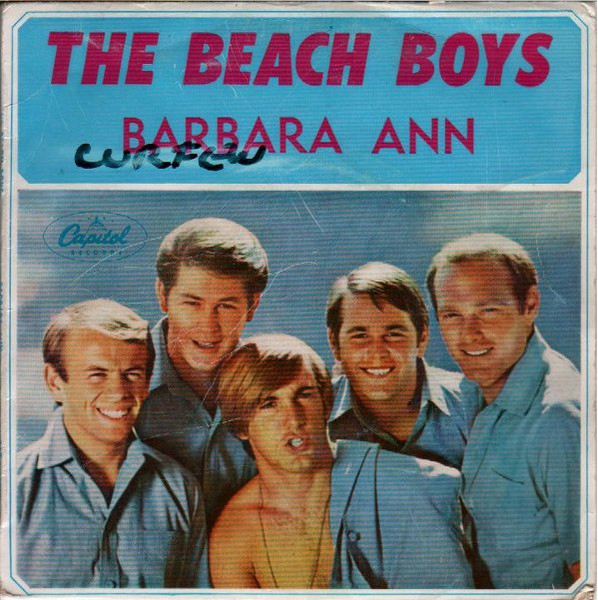
Released in December 1965 as a single and a track on the Beach Boys’ album Beach Boys’ Party!, Barbara Ann is a lively, infectious cover of a doo-wop song originally recorded by The Regents in 1961. Written by Fred Fassert, the song was adapted by the Beach Boys—Brian, Carl, and Dennis Wilson, Mike Love, Al Jardine, and Bruce Johnston—with production credited to Brian Wilson. Recorded on September 23, 1965, at Western Studios in Los Angeles, the track became a surprise hit, peaking at #2 on the Billboard Hot 100 and #3 in the U.K. Its raw, spontaneous energy contrasted with the orchestral sophistication of Pet Sounds, released earlier in 1966, showcasing the band’s versatility.
Barbara Ann emerged during a transitional period for the Beach Boys. By late 1965, Brian Wilson was immersed in creating Pet Sounds, but Capitol Records, concerned about the band’s commercial momentum after the modestly performing Summer Days (And Summer Nights!!), pushed for a quick, marketable release. The Beach Boys’ Party! album, conceived as a live-in-the-studio “party” record, was a strategic move to satisfy the label while Brian focused on his masterpiece. Barbara Ann, with its upbeat vibe and nostalgic appeal, was chosen as the album’s lead single, capitalizing on the era’s fascination with rock ‘n’ roll revivalism.
The recording process was notably casual. Designed to mimic an impromptu jam, the session captured the Beach Boys and guests, including Dean Torrence of Jan and Dean, singing and laughing in a loose, unpolished style. Brian used minimal instrumentation—guitar, bass, and percussion—to evoke a garage-band feel, while the group’s harmonies and ad-libs added charm. The track’s raw energy, complete with studio chatter and off-key moments, resonated with fans, offering a contrast to the band’s polished hits like California Girls.
Barbara Ann had a significant cultural impact. Its success helped bridge the Beach Boys’ surf-pop era with their experimental phase, maintaining their chart presence during a competitive time dominated by The Beatles and The Rolling Stones. The song became a staple of oldies radio, covered by artists like The Who and featured in films like American Graffiti (1973). Its nostalgic, communal vibe captured the 1960s’ love for 1950s rock, though some modern listeners note its simplistic lyrics reflect a male-centric view of romance typical of the era. Nonetheless, Barbara Ann remains a beloved classic, evoking carefree joy.
Inspiration and Creation
The inspiration for Barbara Ann stemmed from the Beach Boys’ desire to reconnect with their rock ‘n’ roll roots and capitalize on the 1960s’ nostalgia for 1950s doo-wop. The original song, written by Fred Fassert for his brother’s group, The Regents, was a regional hit in 1961, inspired by a real-life Barbara Ann, the sister of a band member. The Beach Boys, particularly Brian and Mike, were fans of doo-wop, having grown up on groups like The Coasters and The Drifters. When brainstorming for Beach Boys’ Party!, they chose Barbara Ann for its catchy melody and sing-along appeal, seeing it as a perfect fit for the album’s informal concept.
Brian’s creative process was deliberately lighthearted. Unlike his meticulous work on Pet Sounds, he aimed to capture the spontaneity of a house party. The Party! album was recorded with minimal rehearsal, using a stripped-down setup to mimic a live performance. For Barbara Ann, Brian encouraged the band to have fun, resulting in a track filled with laughter, banter, and playful vocal flourishes. Dean Torrence, a friend and collaborator, joined the session, sharing lead vocals with Brian, which added to the track’s communal vibe. The decision to keep imperfections, like off-key notes and studio noise, was intentional, enhancing the song’s authenticity.
The recording session, held in September 1965, was a departure from the Beach Boys’ usual polish. Brian used a single microphone for vocals, capturing the group’s harmonies in a raw, unfiltered way. The instrumentation—Carl’s guitar, Dennis’s tambourine, and Al’s bass—was kept simple, with Hal Blaine providing subtle percussion. The track’s energy came from the group’s chemistry, with Mike and Bruce adding call-and-response vocals that echoed 1950s street-corner doo-wop. The session’s loose atmosphere, fueled by soda and snacks, reflected the band’s attempt to recapture the joy of their early days.
External factors influenced the song’s creation. Capitol’s demand for a quick release pressured Brian to produce Party! in weeks, a stark contrast to Pet Sounds’ months-long process. The 1965 music scene, with its mix of British Invasion and Motown hits, also shaped the decision to revive a doo-wop classic, tapping into a growing nostalgia for simpler times. The song’s release in December 1965, during the holiday season, amplified its feel-good appeal, making it a radio favorite as fans embraced its infectious energy.
Themes and Conveyed Content
Lyrically, Barbara Ann is a straightforward celebration of infatuation and youthful exuberance. The narrator expresses his obsession with Barbara Ann, pleading for her affection with lines like “Tried Peggy Sue, tried Betty Lou… but I knew they wouldn’t do.” The repetitive chorus—“Ba ba ba, ba Barbara Ann”—invites communal singing, while the playful tone and simple rhymes evoke the innocence of 1950s rock. Delivered with Brian and Dean’s enthusiastic vocals, the lyrics capture a carefree, flirtatious spirit.
The song’s themes reflect the 1960s’ nostalgia for the 1950s, a period romanticized as a time of simplicity before the era’s social upheavals. The narrator’s focus on chasing girls aligns with the era’s teenage culture, where romance and social status were central. Unlike Pet Sounds’ introspective tracks, Barbara Ann is unabashedly fun, offering an escape from the Vietnam War and civil rights tensions. Its communal vibe, enhanced by the group’s harmonies and ad-libs, suggests a shared celebration, mirroring the sing-along spirit of doo-wop.
Musically, Barbara Ann conveys joy and spontaneity. The uptempo rhythm and jangly guitar create a danceable groove, while the call-and-response vocals and handclaps foster a party atmosphere. The raw production, with its audible laughter and imperfections, adds authenticity, making listeners feel part of the jam. The song’s simplicity, with its three-chord structure, harks back to rock ‘n’ roll’s roots, contrasting with the Beach Boys’ more complex later work.
Culturally, Barbara Ann reinforced the Beach Boys’ image as purveyors of fun, even as Brian explored deeper themes. Its revival of doo-wop tapped into a broader 1960s trend, seen in acts like Sha Na Na, that romanticized the 1950s. However, its male gaze and lack of female perspective reflect the era’s gender norms, a point some modern listeners critique. Still, its universal appeal and nostalgic charm ensure its enduring popularity, evoking a moment of pure, unadulterated fun.
Lyrics
Ah, ba ba ba ba Barbara Ann
Ba ba ba ba Barbara Ann
Oh Barbara Ann take my hand
Barbara Ann
You got me rockin’ and a-rollin’
Rockin’ and a-reelin’
Barbara Ann ba ba
Ba Barbara Ann
Went to a dance, lookin’ for romance
Saw Barbara Ann, so I thought I’d take a chance
With Barbara Ann, Barbara Ann
You got me rockin’ and a-rollin’
Rockin’ and a-reelin’
Barbara Ann ba ba
Ba Barbara Ann
Ba ba ba ba Barbara Ann
Ba ba ba ba Barbara Ann
Oh Barbara Ann take my hand
Barbara Ann
You got me rockin’ and a-rollin’
Rockin’ and a-reelin’
Barbara Ann ba ba
Ba Barbara Ann
Tried Peggy Sue
Tried Betty Lou
Tried Mary Lou
But I knew they wouldn’t do
For Barbara Ann, Barbara Ann
You got me rockin’ and a-rollin’
Rockin’ and a-reelin’
Barbara Ann ba ba
Ba Barbara Ann
Ba ba ba ba Barbara Ann
Ba ba ba ba Barbara Ann
Oh Barbara Ann take my hand
Barbara Ann
You got me rockin’ and a-rollin’
Rockin’ and a-reelin’
Barbara Ann ba ba
Ba Barbara Ann
Barbara Ann, Barbara Ann
Oh, Barbara Ann, Barbara Ann
Yeah, Barbara Ann, Barbara Ann
Barbara Ann, Barbara Ann
You got me rockin’ and a-rollin’
Rockin’ and a-reelin’
Barbara Ann ba ba
Ba Barbara Ann