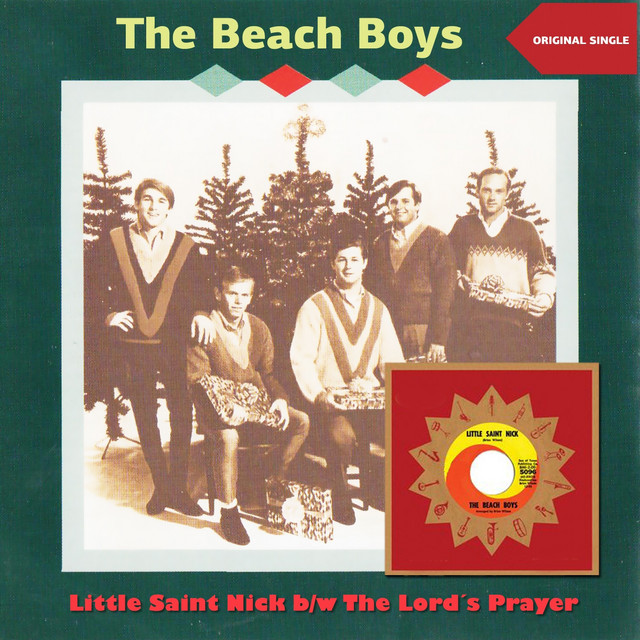
Released in December 1963 as a single and later included on The Beach Boys’ Christmas Album (1964), Little Saint Nick is a festive, upbeat pop song that blends the Beach Boys’ signature surf rock style with holiday cheer, creating one of the most enduring Christmas songs in rock history. Written by Brian Wilson and Mike Love, the song was produced by Brian Wilson and recorded on October 20, 1963, at Western Studios in Los Angeles. Featuring the Beach Boys—Brian, Carl, and Dennis Wilson, Mike Love, and Al Jardine—the single reached #3 on the Billboard Christmas chart and became a seasonal radio staple, contributing to the Christmas album’s #6 peak on the Billboard 200.
Little Saint Nick emerged during the Beach Boys’ early peak, following hits like Surfin’ U.S.A. and Be True to Your School in 1963. By late 1963, the band was a leading force in American pop, capitalizing on the surf and car culture craze while competing with The Beatles’ emerging British Invasion. The song was part of a strategic move by Capitol Records to release a Christmas album, tapping into the lucrative holiday market dominated by artists like Bing Crosby and Nat King Cole. Little Saint Nick stood out as an original composition, blending the band’s beach vibe with festive themes, distinguishing it from the album’s traditional covers.
The recording process showcased Brian Wilson’s production ingenuity. At 21, he crafted a vibrant track with a sleigh bell-driven rhythm, Carl Wilson’s jangly guitar, and a playful glockenspiel riff, evoking a wintery yet sunny sound. Mike Love’s lead vocal exuded holiday enthusiasm, while the band’s tight harmonies, layered meticulously, added warmth. The Wrecking Crew, including Hal Blaine on drums, provided a polished backbone. The song’s release as a single, backed by The Lord’s Prayer, capitalized on the 1963 holiday season, resonating with fans and establishing it as a modern Christmas classic.
Little Saint Nick has had a significant cultural impact. Covered by artists like The Muppets and She & Him, and featured in holiday media from Home Alone to Christmas commercials, it remains a perennial favorite. Its fusion of surf rock and Christmas themes influenced later holiday pop, reinforcing the Beach Boys’ role as innovators. While its male-centric car imagery reflects 1960s norms, its universal festive joy ensures its timeless appeal, making it a beloved part of holiday traditions worldwide.
Inspiration and Creation
The inspiration for Little Saint Nick stemmed from Brian Wilson and Mike Love’s desire to create a unique Christmas song that reflected the Beach Boys’ signature sound. In 1963, Brian was immersed in the band’s success, drawing on their surf and car culture themes to craft a holiday song that stood out from traditional carols. The song was inspired by the idea of reimagining Santa Claus as a hot rod enthusiast, driving a souped-up sleigh likened to a high-performance car. This concept merged the band’s love for automotive imagery, seen in songs like 409, with the festive spirit of Christmas, appealing to their teenage fanbase.
Brian’s creative process was driven by a blend of innovation and nostalgia. He drew musical inspiration from The Four Seasons’ Sherry, with its upbeat rhythm, and Phil Spector’s Christmas album, which featured lavish holiday productions. The melody, composed on piano, recycled elements from Little Deuce Coupe (1963), with a similar chord progression but reimagined with a festive twist, incorporating sleigh bells and a glockenspiel to evoke a winter sleigh ride. Mike Love’s lyrics, with lines like “Run run reindeer” and “Christmas comes this time each year,” used playful, car-inspired imagery—candy cane cooling and chrome sleigh parts—to create a whimsical portrait of Santa’s “candy apple red” sleigh.
Recording sessions on October 20, 1963, were festive and collaborative. Brian, as producer, worked with engineer Chuck Britz at Western Studios, using multi-track recording to layer vocals and instruments. The Wrecking Crew provided a tight foundation—Blaine’s sleigh bell-heavy drums, Carol Kaye’s bass, and Billy Strange’s guitar—while Carl’s twelve-string guitar added sparkle. Mike’s lead vocal, backed by Brian’s falsetto and the band’s harmonies, conveyed holiday cheer, with multiple takes ensuring vocal precision. The glockenspiel, played by an uncredited session musician, added a magical touch, enhancing the song’s wintery vibe.
External factors shaped the song’s creation. Capitol Records, eager to capitalize on the Beach Boys’ popularity and the holiday market, commissioned The Beach Boys’ Christmas Album, pushing for original tracks to distinguish it from competitors. The 1963 music scene, with The Beatles’ I Want to Hold Your Hand and traditional holiday fare, demanded fresh, youth-oriented songs. Released in December 1963, during the holiday season, Little Saint Nick resonated with teens and families, blending rock energy with Christmas nostalgia, amplifying its seasonal impact.
Themes and Conveyed Content
Lyrically, Little Saint Nick is a playful celebration of Christmas, reimagining Santa Claus as a hot rod-driving, gift-delivering hero. The narrator describes Santa’s “candy apple red” sleigh, packed with high-tech features like “four-speed stick” and “candy cane cooling,” likening it to a drag racer. Lines like “Run run reindeer, they don’t miss a trick” evoke speed and excitement, while “Christmas comes this time each year” grounds the song in holiday tradition. Mike’s enthusiastic vocal, paired with the band’s buoyant harmonies, creates a festive, communal tone, inviting listeners to join the holiday joyride.
The song’s themes reflect the early 1960s’ blend of youthful rebellion and festive tradition. By portraying Santa as a car enthusiast, the song merges the Beach Boys’ hot rod culture with Christmas, symbolizing freedom and fun within a family-friendly context. The emphasis on speed and style resonates with teens idolizing cars as status symbols, while the holiday setting offers universal appeal, bridging generational divides. Unlike introspective Beach Boys songs like In My Room, Little Saint Nick is unabashedly fun, providing an escapist thrill amid Cold War anxieties and societal pressures, celebrating the magic of Christmas with a rock ‘n’ roll twist.
Musically, Little Saint Nick conveys joy and festivity. The uptempo rhythm, driven by sleigh bells and Blaine’s drums, evokes a sleigh dashing through snow, while Carl’s guitar and the glockenspiel add a sparkling, wintery charm. The harmonies, tight and vibrant, create a communal atmosphere, as if the band is caroling alongside Santa. Brian’s production, with its crisp instrumentation and dynamic vocal layering, balances rock energy with holiday warmth, making the song ideal for radio and festive gatherings.
Culturally, Little Saint Nick solidified the Beach Boys’ role as innovators, blending their California youth culture with holiday traditions, influencing modern Christmas pop. For listeners worldwide, it painted a fantasy of a rock ‘n’ roll Santa, amplifying the holiday’s joy and California’s allure as a cultural hub. Its male-centric car imagery reflects 1960s norms, but its universal festive spirit mitigates modern critique. The song’s timeless appeal lies in its infectious celebration of Christmas, evoking the thrill of a high-speed sleigh ride under starry skies.