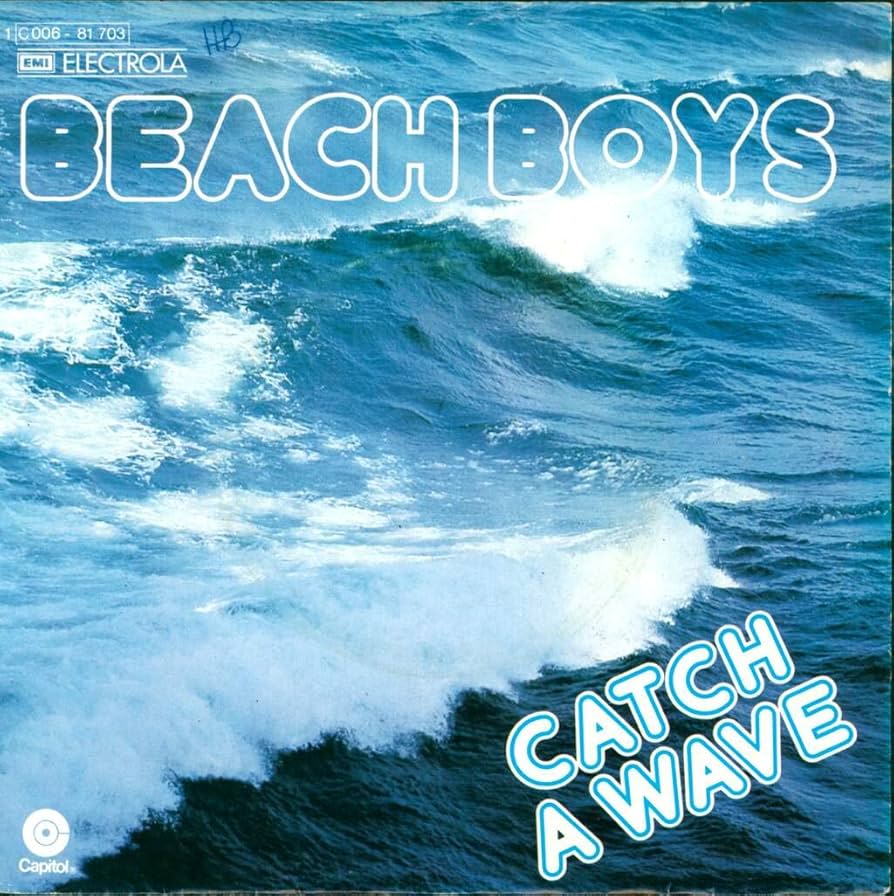
Released in September 1963 as a track on the Beach Boys’ album Surfer Girl and later as a B-side to the single Hawaii in some international markets, Catch a Wave is an exuberant surf rock anthem that encapsulates the band’s early sound and their celebration of Southern California’s beach culture. Written by Brian Wilson and Mike Love, the song was produced by Brian Wilson and recorded on July 14, 1963, at Western Studios in Los Angeles. Featuring the Beach Boys—Brian, Carl, and Dennis Wilson, Mike Love, and David Marks (with Al Jardine temporarily absent)—the track was not a major chart hit but became a fan favorite, often highlighted for its infectious energy and tight harmonies.
Catch a Wave emerged during the Beach Boys’ rapid rise in the early 1960s, a period when they were defining the surf rock genre alongside hits like Surfin’ U.S.A. and Surfer Girl. The Surfer Girl album, which peaked at #7 on the Billboard 200, showcased the band’s growing versatility, blending upbeat rockers with introspective ballads. Catch a Wave stood out as a quintessential surf anthem, capturing the thrill of riding waves and the carefree spirit of youth. Its placement on the album, alongside tracks like In My Room, demonstrated the Beach Boys’ ability to balance fun and emotional depth, solidifying their appeal amid competition from acts like The Four Seasons and early Motown artists.
The recording process highlighted Brian Wilson’s burgeoning production skills. At 21, he crafted a lively track with a driving rhythm, featuring Carl Wilson’s jangly guitar, Dennis Wilson’s dynamic drumming, and a distinctive harp glissando played by Maureen Love, Mike’s sister. Mike Love’s lead vocal exuded confidence, while the band’s harmonies, layered meticulously, added a polished sheen. The song’s inclusion on Surfer Girl and its occasional use as a B-side helped it reach a wide audience, contributing to the album’s gold certification.
Catch a Wave has had a lasting cultural impact. It was covered by surf rock bands like The Surfaris and featured in media celebrating 1960s beach culture, such as documentaries about surfing. The song’s celebration of surfing reinforced California’s mythic status as a youth paradise, influencing pop culture trends from beach films to surf fashion. While its male-centric perspective and focus on physical prowess reflect 1960s norms, its universal themes of joy and adventure ensure its enduring appeal, making it a classic of the Beach Boys’ early catalog.
Inspiration and Creation
The inspiration for Catch a Wave came from the Beach Boys’ deep connection to Southern California’s surf culture, which defined their early identity. Brian Wilson, though not a surfer himself, was captivated by the sport’s energy and symbolism, largely through his brother Dennis, the band’s only avid surfer. The song was inspired by the thrill of surfing, a cultural phenomenon in 1963 fueled by lightweight foam boards, surf magazines like Surfer, and films like Gidget. Brian and Mike Love aimed to craft an anthem that captured the physical rush of riding a wave and the social prestige it conferred among teens.
Brian’s creative process was rooted in his love for rock ‘n’ roll and doo-wop, drawing on the rhythmic drive of Chuck Berry and the vocal arrangements of The Four Freshmen. He composed the melody on piano, creating an upbeat, syncopated riff that mirrored the motion of waves. Mike Love’s lyrics, written to complement Brian’s music, used surfing slang like “toes on the nose” and vivid imagery of “shootin’ the curls” to evoke the sport’s excitement. The song’s narrative, encouraging listeners to “catch a wave and you’re sittin’ on top of the world,” positioned surfing as a metaphor for triumph and freedom.
Recording sessions on July 14, 1963, were energetic and collaborative. Brian, as producer, worked with engineer Chuck Britz, using Western’s three-track recorder to capture the band’s raw vitality. Carl’s guitar and Dennis’s drums drove the track’s rhythm, while David Marks and Brian handled bass and organ parts. Maureen Love’s harp, an unusual addition for a rock song, added a sparkling flourish, evoking the shimmer of ocean spray. Mike’s lead vocal, backed by the band’s harmonies, conveyed enthusiasm, with Brian’s falsetto soaring in the chorus. Brian’s perfectionism ensured a crisp, radio-ready sound, balancing the song’s live-band feel with polished production.
External factors shaped the song’s creation. Capitol Records, buoyed by Surfin’ U.S.A.’s success, supported the Surfer Girl album’s focus on surf themes to capitalize on the craze. The 1963 music scene, with its mix of surf rock, doo-wop, and emerging British Invasion influences, demanded high-energy, youth-oriented songs. Catch a Wave’s release in September 1963, as summer transitioned to fall, resonated with teens nostalgic for beach days, amplifying its cultural relevance.
Themes and Conveyed Content
Lyrically, Catch a Wave is a spirited celebration of surfing, youth, and triumph. The narrator urges listeners to “catch a wave and you’re sittin’ on top of the world,” portraying surfing as a path to social status and personal fulfillment. Lines like “Get your toes on the nose and hang ten with a curl” use authentic surf lingo, while the mention of “cut-offs” and “boardwalk” grounds the song in California’s beach scene. Mike’s confident vocal, paired with the band’s buoyant harmonies, amplifies the song’s exuberant tone, inviting listeners to join the adventure.
The song’s themes reflect the early 1960s’ obsession with youth culture and physical prowess. Surfing, depicted as both a sport and a lifestyle, symbolizes freedom, rebellion, and mastery over nature, resonating with teens seeking identity beyond societal constraints. The idea of being “on top of the world” captures the era’s optimism, offering an escape from Cold War anxieties and social conformity. Unlike later Beach Boys songs like In My Room, which explored introspection, Catch a Wave is unapologetically fun, emphasizing action and camaraderie over emotional depth.
Musically, Catch a Wave conveys energy and exhilaration. The uptempo rhythm and syncopated guitar riff evoke the rush of riding a wave, while the harp glissando and handclaps add a playful sparkle. The harmonies, tight and vibrant, create a communal vibe, as if the band is cheering the surfer on. Brian’s production, with its dynamic shifts and crisp mix, balances raw rock energy with pop polish, making the song ideal for radio and beach parties.
Culturally, Catch a Wave reinforced the Beach Boys’ role as ambassadors of California’s surf culture, alongside Surfin’ Safari. For listeners nationwide, it painted a fantasy of sunlit beaches and endless adventure, boosting California’s allure as a cultural hub. Its male-centric focus, with surfing as a masculine pursuit, reflects 1960s gender norms, though its universal celebration of joy mitigates modern critique. The song’s timeless appeal lies in its infectious depiction of youth and freedom, evoking the thrill of chasing waves in a vibrant era.
Lyrics
Catch a wave and you’re sittin’ on top of the world
Don’t be afraid to try the greatest sport around
Everybody tries it once
Those who don’t just have to put it down
You paddle out turn around and raise
And baby that’s all there is to the coastline craze
You gotta catch a wave and you’re sittin’ on top of the world
Not just a fad cause it’s been goin’ on so long
All the surfers goin’ strong
They said it wouldn’t last too long
They’ll eat their words with a fork and spoon
And watch ’em they’ll hit the road and all be surfin’ soon
And when they catch a wave they’ll be sittin’ on top of the world
Catch a wave and you’re sittin’ on top of the world
So take a lesson from a top-notch surfer boy
Every Saturday boy
But don’t treat it like a toy
Just get away from the shady turf
And baby go catch some rays on the sunny surf
And when you catch a wave you’ll be sittin’ on top of the world
Catch a wave and you’ll be sittin’ on top of the world
Catch a wave and you’ll be sittin’ on top of the world
Catch a wave and you’ll be sittin’ on top of the world