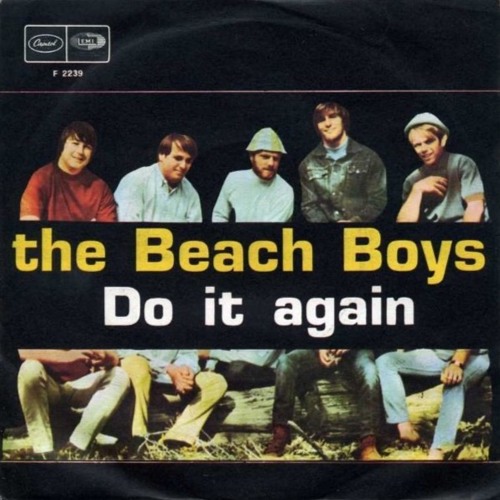
Released in July 1968 as a single and later included on the Beach Boys’ album 20/20 (1969), Do It Again is a nostalgic, upbeat track that marked a return to the band’s early surf-pop sound after the experimental complexities of Pet Sounds (1966) and Smiley Smile (1967). Written by Brian Wilson and Mike Love, the song was produced by Brian and Carl Wilson and recorded on May 26 and June 6, 1968, at Brian’s home studio and Western Studios in Los Angeles. Featuring the Beach Boys—Brian, Carl, and Dennis Wilson, Mike Love, Al Jardine, and Bruce Johnston—alongside select session musicians, the single reached #20 on the Billboard Hot 100 and hit #1 in the U.K., a significant achievement during a challenging period for the band.
Do It Again emerged as the Beach Boys navigated a turbulent phase. After the collapse of Brian’s ambitious Smile project in 1967, compounded by his mental health struggles and reduced creative involvement, the band faced declining commercial success and critical skepticism. Albums like Wild Honey (1967) and Friends (1968) embraced a simpler, R&B-influenced sound but failed to match earlier chart triumphs. Do It Again was a deliberate attempt to reconnect with fans by revisiting the surf and sun themes of hits like Surfin’ U.S.A., while still showcasing the band’s evolved vocal and production skills. Its U.K. chart-topping success reaffirmed their international appeal, though U.S. fans were slower to embrace it amid the rise of heavier rock acts like The Doors and Jimi Hendrix.
The recording process reflected a blend of nostalgia and innovation. Brian, though less dominant than in the Pet Sounds era, co-led production with Carl, using a lo-fi yet polished approach. The track featured a driving drumbeat, jangly guitars, and the band’s signature harmonies, with Mike Love’s lead vocal exuding warmth and reminiscence. A brief instrumental coda, incorporating workshop sound effects, nodded to the Smile sessions’ experimental spirit. The song’s release as a single, backed by Wake the World, capitalized on summer 1968’s carefree vibe, resonating with audiences yearning for simpler times.
Do It Again had a lasting cultural impact. It became a fan favorite, performed live well into the band’s later years, and was covered by artists like Wall of Voodoo. Its nostalgic tone captured the late 1960s’ longing for pre-counterculture innocence, influencing retro-revival trends. While its male-centric perspective and idealized beach imagery reflect 1960s norms, the song’s universal themes of memory and joy ensure its enduring appeal, evoking the Beach Boys’ golden era.
Inspiration and Creation
The inspiration for Do It Again stemmed from Brian Wilson and Mike Love’s desire to recapture the Beach Boys’ early magic while reflecting on their personal and collective past. In 1968, Brian was grappling with mental health issues and the fallout from Smile’s abandonment, but a visit to the beach with Mike sparked memories of their teenage years surfing and cruising in Southern California. Mike suggested a song that celebrated those carefree days, proposing the title Do It Again to evoke both literal (returning to the beach) and metaphorical (revisiting their musical roots) nostalgia. The song’s beach and surf imagery was a direct nod to their 1962–1963 hits, tailored to reconnect with fans alienated by recent experimental works.
Brian’s creative process was collaborative yet introspective. He composed the melody on piano, drawing on the simplicity of early rock ‘n’ roll and the rhythmic drive of Chuck Berry. The song’s structure—verse-chorus with a repetitive, anthemic refrain—was designed for sing-along appeal, while the lyrics, co-written with Mike, painted vivid scenes of “suntanned bodies” and “waves a-curlin’.” The inclusion of a workshop sound effects coda, featuring hammering and sawing, was a remnant of Smile’s “Elements” suite, specifically the “Fire” section, reflecting Brian’s lingering attachment to that project.
Recording sessions in May and June 1968 were efficient, a contrast to the sprawling Smile sessions. Brian and Carl worked with engineer Stephen Desper, using Brian’s newly built home studio for initial tracks and Western Studios for overdubs. The band’s core lineup handled most instrumentation, with Carl on guitar, Dennis on drums, and Al on bass, though session musicians like Hal Blaine contributed percussion. Mike’s lead vocal, backed by Brian’s falsetto and the group’s harmonies, conveyed a warm, nostalgic glow. The production, though simpler than Good Vibrations, retained a rich texture, with layered vocals and a crisp drum sound evoking the ocean’s rhythm.
External factors shaped the song’s creation. Capitol Records, concerned about the Beach Boys’ declining U.S. sales, pressured the band for a commercial hit to rival The Beatles’ Hey Jude and the psychedelic rock dominating 1968. The late 1960s music scene, with its mix of heavy rock, folk, and soul, made the Beach Boys’ return to surf-pop a risky but calculated move. Released in July 1968, during the peak of summer and the Summer of Love’s aftermath, Do It Again tapped into a cultural yearning for nostalgia, resonating with audiences reflecting on a turbulent decade.
Themes and Conveyed Content
Lyrically, Do It Again is a nostalgic celebration of youth, summer, and the joy of reliving cherished memories. The narrator invites listeners back to the beach, where “suntanned bodies and waves a-curlin’” evoke carefree days of surfing and romance. The refrain—“Let’s get together and do it again”—is both a call to action and a wistful plea to recapture lost innocence. Mike’s warm vocal, paired with the band’s soaring harmonies, amplifies the song’s bittersweet tone, blending exuberance with a hint of longing for simpler times.
The song’s themes reflect the late 1960s’ tension between nostalgia and change. As the counterculture peaked with Woodstock and anti-war protests, Do It Again offered an escape, harking back to the pre-1967 era of drive-ins and beach parties. The beach setting, a staple of the Beach Boys’ early work, symbolizes freedom and community, while the act of “doing it again” suggests a universal desire to revisit happier moments. Unlike Pet Sounds’ introspective depth, Do It Again is lighthearted yet poignant, capturing the era’s longing for stability amid social upheaval.
Musically, Do It Again conveys joy and reminiscence. The upbeat tempo and driving drumbeat evoke the energy of a beach day, while the jangly guitars and harmonies create a sunlit, communal vibe. The production’s warmth, with its layered vocals and subtle sound effects, mirrors the song’s nostalgic glow. The workshop coda, with its industrial clangs, adds an unexpected quirk, hinting at Brian’s experimental roots while grounding the track in a tactile, working-class ethos.
Culturally, Do It Again reinforced the Beach Boys’ role as purveyors of California’s mythic youth culture, much like Surfin’ Safari. For global audiences, it painted a fantasy of endless summers, boosting California’s allure. Its male-centric imagery, with girls as part of the beach scene, reflects 1960s norms, but its universal nostalgia mitigates modern critique. The song’s timeless appeal lies in its ability to evoke shared memories of youth, making it a bridge between the Beach Boys’ past and their enduring legacy.
Lyrics
It’s automatic when I talk with old friends
The conversation turns to girls we knew
When their hair was soft and long
And the beach was the place to go
Suntanned bodies and waves of sunshine
The California girls and a beautiful coastline
Warmed up weather let’s get together
And do it again
With a girl the lonely sea looks good
Makes your nighttimes warm and out of sight
Been so long since I held you tight
On a summer’s night
Let’s get together and do it again
Oh let’s get together and do it again
Dum dum dum be doo be doo
Dum dum dum be doo be doo
Dum dum dum be doo be doo
Ooh let’s get together and do it again
Dum dum dum be doo be doo
Dum dum dum be doo be doo
Dum dum dum be doo be doo
Ooh let’s get together and do it again