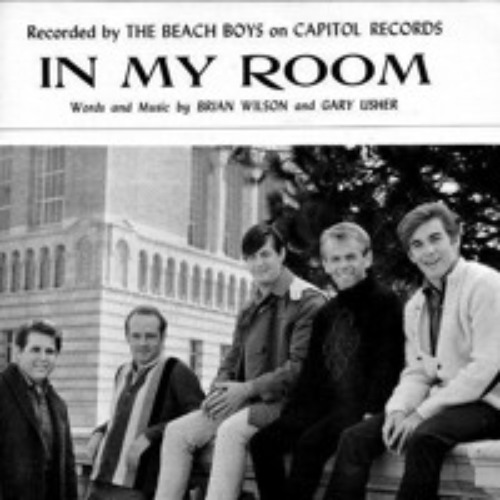
Released in September 1963 as a track on the Beach Boys’ album Surfer Girl and as the B-side to the single Be True to Your School, In My Room is a poignant ballad that marked a significant shift in the band’s early career, revealing their capacity for introspective songwriting. Written by Brian Wilson and Gary Usher, the song was produced by Brian Wilson and recorded on July 16, 1963, at Western Studios in Los Angeles. Featuring the Beach Boys—Brian, Carl, and Dennis Wilson, Mike Love, and David Marks (with Al Jardine temporarily absent)—the track did not chart as a single but became one of the band’s most beloved songs, earning critical acclaim for its emotional depth.
In My Room emerged during the Beach Boys’ rapid rise in the early 1960s, following hits like Surfin’ U.S.A. and Surfer Girl. While known for their upbeat surf and car anthems, the band began exploring more personal themes with this track, foreshadowing the introspective brilliance of Pet Sounds (1966). The song’s gentle melody and lush harmonies contrasted with the era’s rock ‘n’ roll energy, showcasing Brian’s growing songwriting sophistication at age 21. Its placement on Surfer Girl, a #7 album on the Billboard 200, helped broaden the band’s appeal, proving they could balance fun and vulnerability.
The recording process highlighted Brian’s burgeoning production talent. He crafted a minimalist arrangement with guitar, bass, drums, and harp, prioritizing the band’s harmonies to convey the song’s intimacy. Brian and Carl shared lead vocals, with Brian’s falsetto adding a tender vulnerability, while the group’s layered harmonies created a warm, enveloping sound. The song’s B-side status ensured it reached a wide audience, and its emotional resonance made it a fan favorite, often performed live in later years.
In My Room has had a profound cultural impact. Covered by artists like Jacob Collier and featured in media like Buffy the Vampire Slayer, it remains a touchstone for introspective pop. Its exploration of solitude resonated with 1960s youth navigating identity, influencing singer-songwriters like Joni Mitchell. While its male perspective reflects the era’s norms, its universal themes of introspection ensure its timeless appeal, cementing its place as a Beach Boys classic.
Inspiration and Creation
The inspiration for In My Room was deeply personal for Brian Wilson. Growing up in Hawthorne, California, Brian often retreated to his bedroom to escape family tensions, particularly with his domineering father, Murry Wilson, who was also the band’s manager. His room became a sanctuary where he could listen to music, compose, and dream, a safe space amid the pressures of adolescence and early fame. Brian collaborated with Gary Usher, a songwriter and friend who shared his love for doo-wop and emotional ballads, to translate this experience into a universal narrative about solitude and self-reflection.
Brian’s creative process was introspective yet collaborative. He composed the melody on piano, drawing on the lush harmonies of The Four Freshmen and the gentle cadences of 1950s ballads like The Platters’ My Prayer. The song’s simple chord progression and slow tempo created a meditative mood, while Usher’s lyrics captured the sanctuary of a bedroom: “There’s a world where I can go and tell my secrets to.” Brian aimed to craft a ballad that contrasted with the Beach Boys’ surf hits, revealing a vulnerable side to their image and appealing to listeners beyond the teenage party crowd.
Recording sessions on July 16, 1963, were intimate and focused. Brian, as producer, worked with engineer Chuck Britz, using Western’s three-track recorder to prioritize vocal clarity. The band handled most instrumentation—Carl on guitar, Dennis on drums, and David on bass—with a session harpist adding a delicate flourish. Brian and Carl’s shared lead vocals, backed by Mike and David’s harmonies, created a choir-like effect, evoking the song’s private, almost sacred atmosphere. Brian’s perfectionism led to multiple vocal takes, ensuring the harmonies conveyed the intended warmth and introspection.
External factors shaped the song’s creation. Capitol Records, riding the success of Surfin’ U.S.A., supported the Surfer Girl album’s diverse tracklist, allowing Brian to experiment with ballads. The 1963 music scene, dominated by surf rock, doo-wop, and early Motown, demanded versatility, and In My Room balanced the Beach Boys’ fun-loving hits with emotional depth. Its release in September 1963, as summer waned, resonated with teens reflecting on their personal lives, amplifying its emotional impact.
Themes and Conveyed Content
Lyrically, In My Room is a tender exploration of solitude, safety, and self-expression. The narrator describes retreating to his bedroom to escape “fears” and “tears,” finding solace in a private “world where I can go and tell my secrets to.” Lines like “In this world I lock out all my worries and my fears” convey a sense of refuge, while “Do my dreaming and my scheming” suggests creativity and hope. Brian and Carl’s gentle vocals, paired with the band’s harmonies, create an intimate, confessional tone, inviting listeners into the narrator’s inner sanctum.
The song’s themes reflect the early 1960s’ tension between youthful exuberance and private struggles. The bedroom, a universal symbol of safety for teens, represents a retreat from external pressures—family, school, or societal expectations. The narrator’s ability to “laugh and play” alone highlights resilience and imagination, resonating with 1960s youth navigating identity amid the era’s conformity and Cold War anxieties. Unlike the Beach Boys’ upbeat anthems like Fun, Fun, Fun, In My Room embraces vulnerability, offering a rare glimpse into the emotional lives of young men, a bold move for 1963 pop.
Musically, In My Room conveys warmth and introspection. The slow tempo and minor-key undertones evoke a contemplative mood, while the major-key chorus lifts the song with hope. The minimalist arrangement—soft guitar strums, subtle drums, and a haunting harp—creates a delicate, almost lullaby-like atmosphere, complementing the lyrics’ intimacy. The harmonies, among the Beach Boys’ most intricate early efforts, wrap the listener in a comforting embrace, reinforcing the song’s theme of solace.
Culturally, In My Room expanded the Beach Boys’ image beyond surf and car culture, aligning with the era’s growing interest in personal expression, seen in folk music and Beat poetry. For listeners, it offered a relatable portrait of solitude, influencing introspective songwriting in the 1960s and beyond. Its male perspective, typical of the era, focuses on individual experience, but its universal themes mitigate modern critique. The song’s enduring appeal lies in its timeless depiction of finding peace within oneself, evoking the quiet power of a private sanctuary.
Lyrics
There’s a world where I can go and tell my secrets to
In my room, in my room
In this world I lock out all my worries and my fears
In my room, in my room
Do my dreaming and my scheming
Lie awake and pray
Do my crying and my sighing
Laugh at yesterday
Now it’s dark and I’m alone
But I won’t be afraid
In my room, in my room
In my room, in my room
In my room, in my room