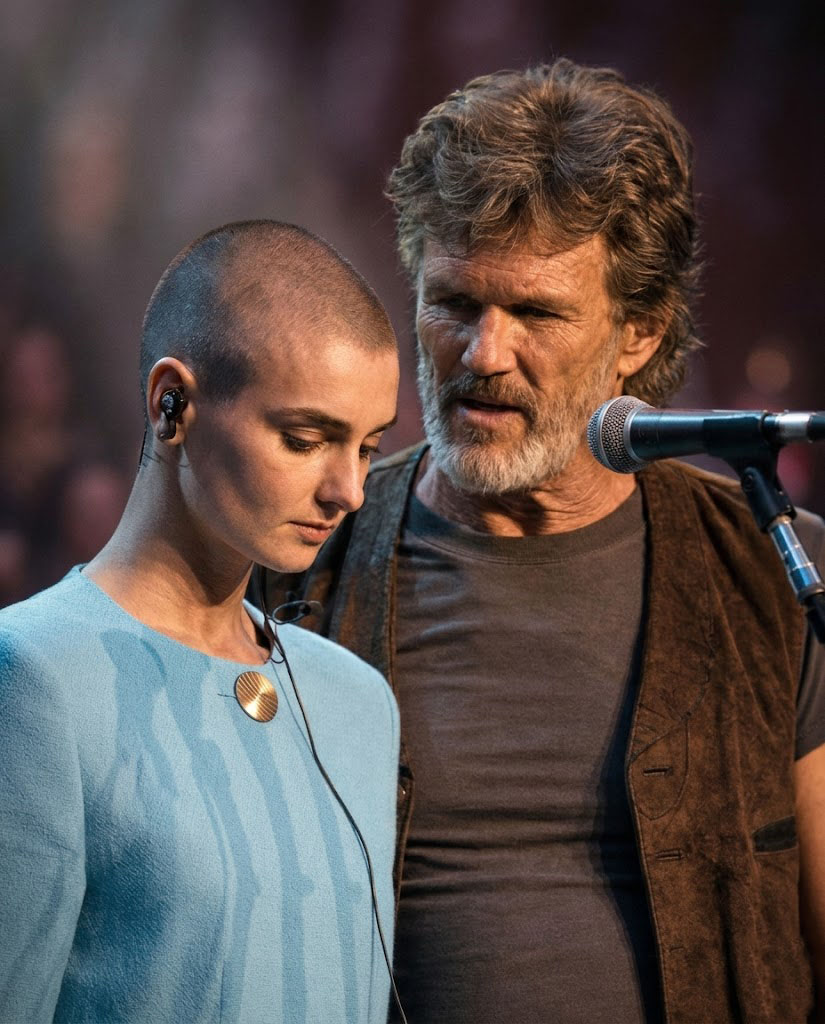
18,000 PEOPLE BOOED — BUT WHEN THEY TOLD KRIS KRISTOFFERSON TO PULL SINÉAD O’CONNOR OFF STAGE, HE WALKED TOWARD HER INSTEAD…
Madison Square Garden was not ready to forgive her.
On October 16, 1992, Sinéad O’Connor stepped onto the stage at Bob Dylan’s 30th-anniversary concert with the weight of the whole world already on her shoulders. She was twenty-five years old, and thirteen days earlier, she had torn up a photograph of the Pope on live television to protest child abuse in the Church.
The punishment had been immediate.
Television mocked her. The industry backed away. People who had once praised her voice suddenly treated her like a problem to be removed. By the time she reached that New York stage, she was no longer just a singer.
She was a target.
The boos came hard.
Eighteen thousand people filled the arena, and the sound rolled toward her like weather. It was not ordinary disapproval. It had the sharpness of a crowd deciding that one young woman should carry all its anger at once.
Backstage, people panicked.
This was supposed to be a celebration of Bob Dylan, a polished tribute to a songwriter who had spent his life turning protest into poetry. But now protest itself was standing under the lights, and the room did not know how to bear it.
They told Kris Kristofferson to get her off the stage.
He could have done it.
He was older, respected, beloved. A country outlaw with enough history behind him to calm a room or end a moment. If he had walked out and gently led her away, many people would have called it professionalism.
But Kris knew better.
He did not walk toward her to remove her.
He walked toward her to stand beside her.
There was no big speech. No attempt to overpower the crowd. Just a man crossing the stage with the calm of someone who understood cruelty when he heard it.
He put his arm around Sinéad and whispered, “Don’t let the bastards get you down.”
She looked back at him and answered, “I’m not down.”
That reply still carries a strange kind of light.
Not because she was unhurt. She was human. Anyone standing in that storm would have felt it. But she refused to let the crowd decide what was left of her.
She was not down.
She was still there.
Then she turned to the microphone and sang “War” a cappella. Her voice was raw, exposed, and unprotected by the comfort of a band. It did not try to charm the room. It did not ask permission to exist.
It simply told the truth as she understood it.
When she finished, she walked offstage and into Kris Kristofferson’s arms.
That is the image that remains.
Not the booing. Not the outrage. Not the industry’s fear. Just an older artist holding a younger one after the world had tried to make her stand alone.
Years later, Kris would write “Sister Sinéad,” giving that night a tenderness it had been denied in the moment. Time would also change the way many people looked back on her protest, especially as the truths she tried to force into daylight could no longer be ignored.
But Kris did not wait for history to become safe.
He chose her then.
In the noise.
In the risk.
In the moment when kindness cost something.
Sometimes courage is not louder than the crowd; sometimes it is one quiet arm around the person everyone else has chosen to abandon…